
5 Reasons Dilley Must Close: An Immigration Attorney's Perspective
By now, many of you have seen the open letter signed by Ms. Rachel, Pedro Pascal, Madonna, and dozens of others demanding the immediate closure of the Dilley Immigration Processing Center in South Texas. The letter opens with a simple, undeniable statement: "No child should be locked in an immigration detention center." Variety As an immigration attorney, I don't just agree with that sentiment. I see the legal and human reality behind it every day.
What this moment has done, perhaps more than anything else, is force many Americans to confront the conditions inside immigration detention for the very first time. The outrage is real and it is warranted. But it's also important to say plainly: what is happening at Dilley is not an anomaly. Poor medical care, psychological harm, and the stripping of basic dignity are not unique to this one facility. They are features of immigration detention as a system. Dilley is a window into something much larger that demands our attention. Here are five reasons it must close.
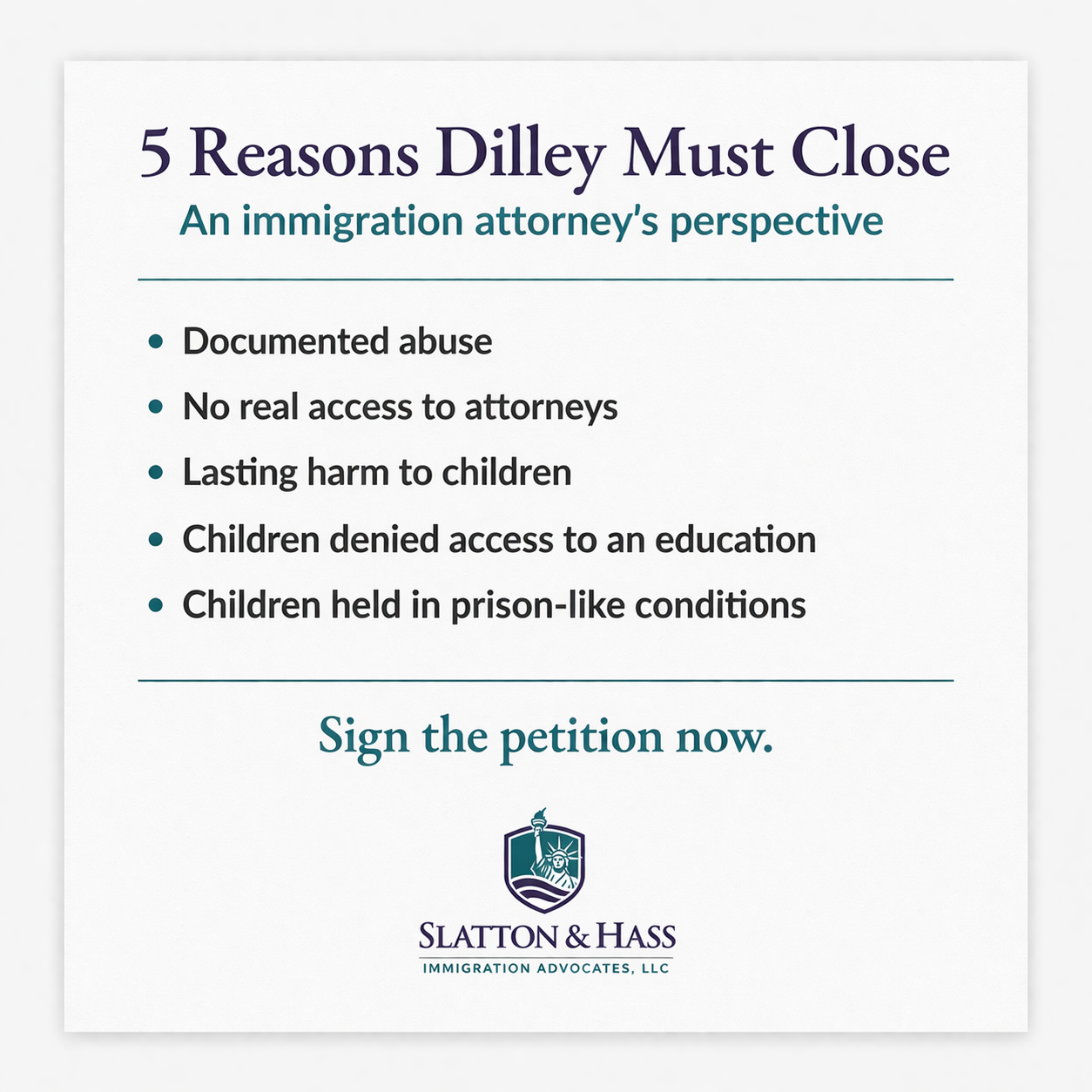
1. The Conditions Constitute Documented Abuse
This isn't a matter of opinion. It's in the court filings. Court documents detail refusals to provide clean water, rotten food contaminated with worms, dangerous medical neglect, sleep deprivation, denial of legal counsel, separation of children from their families, and retaliation against families who protest the inhumane conditions. Variety When conditions rise to the level of documented legal abuse, continued operation of a facility is indefensible.
2. Attorneys Cannot Effectively Represent Their Clients Inside Dilley
As an immigration attorney, I can tell you firsthand that Dilley makes it extraordinarily difficult to do my job, and that directly harms the people I represent. I have had clients inside the facility who are nearly impossible to reach. ICE is notorious for last minute changes to confidential meetings, power outages that occur at the most inconvenient times, and cultivating an environment where immigrants are too intimidated to tell the truth about their conditions, even to their own lawyers. That fear is not irrational. It is the predictable result of a system designed to isolate and control.
Making this worse is a fundamental gap in our legal system that many people don't realize exists: immigrants have no right to a court-appointed attorney. If you cannot afford one, you are on your own. And for those who can afford private counsel, that counsel is being systematically blocked from meaningful access to their clients. You cannot have a fair legal process when one side cannot communicate with its own attorney. Dilley doesn't just hold families. It holds their cases hostage too.
3. It Causes Lasting Psychological Harm
The trauma inflicted inside Dilley doesn't end when a family walks out the door. Reports from inside the facility document children dealing with thoughts of self-harm and suicide, and children who had no prior behavioral issues developing new ones while detained. Detentionwatchnetwork In Gael's case, his health deteriorated during his time at the facility, and he began hitting himself, a behavior he had not exhibited before his detention. Deadline As attorneys, we are trained to think about precedent. The precedent being set here is that the U.S. government will traumatize children and call it policy.
4. It Denies Children the Right to an Education
Every child in the United States, regardless of immigration status, is entitled to an education. That is not a progressive talking point. It is long-standing law, established decades ago and reaffirmed repeatedly by the courts. Inside Dilley, that right is being violated every single day. Children have complained of limited education, lights that never turn off, and moldy food. NBC News You cannot learn when you are hungry, exhausted, and scared. You cannot focus on a lesson when the lights never go off and you don't know what is happening to your family. The conditions inside Dilley are incompatible with any meaningful education, and that means children who may have been thriving in their schools before detention are falling behind in ways that will follow them long after they leave. The facility is operated by CoreCivic, a private prison company. When we outsource the detention of children to for-profit corporations, the incentive structure works against the children's best interests. Denying a child their right to an education is not a side effect of this system. It is the system.
5. No Child Should Ever Be in Prison-Like Conditions. Full Stop.
I've saved the most fundamental reason for last, because no legal argument should be necessary to make it. Ms. Rachel described her video call with nine-year-old Deiver as "unbelievably surreal," saying it felt like she was "on a call with somebody who's in jail." Deadline Deiver had won his school spelling bee and placed third at regionals before he was detained. He told her he wanted to leave so he could go to the state spelling bee competition. NBC News That child should be rehearsing vocabulary words, not begging a children's entertainer for help through a grainy screen. And while he waited, five-year-old Gael, a nonverbal child being assessed for autism, hadn't had a bowel movement in nine days, his stomach visibly distended, while medical staff struggled to help him. Mom.com Every request for medication at Dilley takes up to a week to fulfill. Detentionwatchnetwork This is not a processing center. It is a place where children suffer. Detention, even when it is labeled "processing," is incarceration. Caging children, regardless of their immigration status or their parents' circumstances, is a moral line that a just society does not cross. The law should reflect our values. Right now at Dilley, it doesn't.
The petition is live. The celebrities are speaking. But the loudest voices should be those of us who work in this system and see its failures up close. Sign the letter. Share it. And don't stop pushing until those doors close for good.