
Asylum Is Worth Fighting For: Protecting Due Process in an Era of Pretermission and Third-Country Removal
Much of the public conversation around immigration focuses on visible enforcement. ICE sweeps. Detentions. Raids. Those moments are shocking and they should be.
But something else is happening quietly, procedurally, and largely out of public view. It may be even more destabilizing to the U.S. immigration system than any single enforcement action.
Pretermission and third-country removal through so-called “ACA” processes are fundamentally altering asylum. These practices are not isolated. They are expanding. In many courtrooms, they are quickly becoming the default.
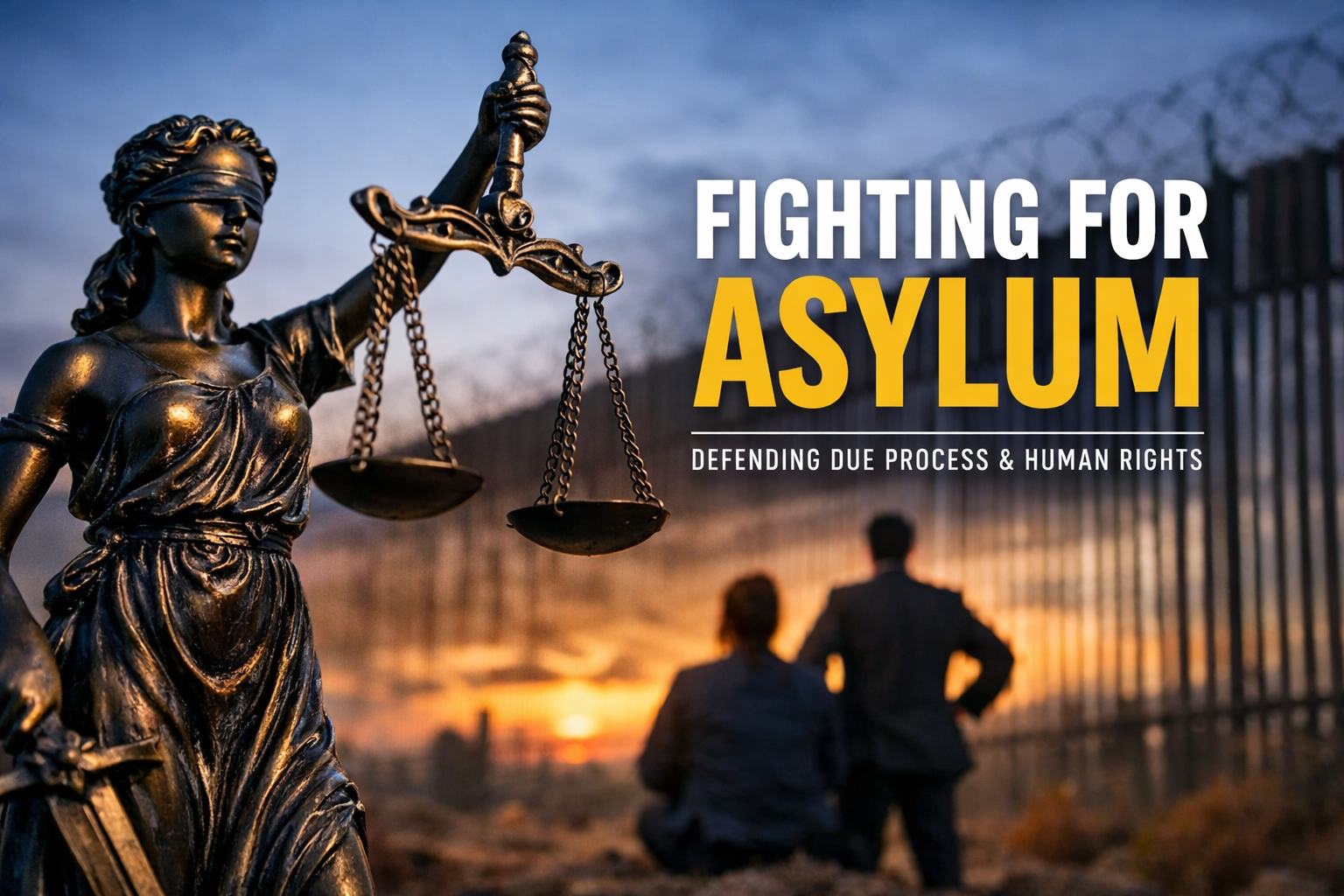
What Is Pretermission?
A pretermission occurs when an asylum case is cut off before it is ever fully heard.
Instead of allowing an applicant to testify, submit corroborating evidence, and receive a decision on the merits, the case is dismissed at the threshold. No full hearing. No weighing of credibility. No meaningful opportunity to prove eligibility.
It is asylum denied not because the claim fails, but because the door is closed before the facts are allowed inside.
The result is a profound shift. Asylum is no longer a protection evaluated through evidence and testimony. It becomes a procedural gatekeeping exercise.
Third-Country Removal and “ACA” Processes
Layered onto this is the practice of removing people to third countries with which they have no meaningful connection. These are often countries where the individual has never lived, has no family, and no support system. In some instances, they are countries the United States itself has identified as dangerous in other contexts.
These removals frequently occur without a robust opportunity to challenge the transfer or present individualized evidence of risk in that third country.
Removing immigrants to random third countries without a full hearing does not merely narrow asylum. It eliminates it. Asylum only exists if there is a process to determine who qualifies. When people are denied that process, the right itself becomes hollow.
Why This Matters Historically
Modern asylum law did not emerge casually. It is rooted in the aftermath of the Holocaust and codified through international commitments like the 1951 Refugee Convention and later domestic legislation. It reflects a global recognition that turning refugees away at the border had catastrophic consequences.
These laws were designed so the United States would never again say we followed technical rules while people fleeing persecution were left to die. They were built to ensure that fear, politics, or administrative convenience would not override moral and legal obligations.
When asylum is curtailed through procedure rather than statute, the protections can disappear without public debate.
How to Fight Back
Despite how entrenched these practices may feel, there are legal and strategic avenues to challenge them.
1. Develop similarly situated evidence
Courts and adjudicators do not operate in a vacuum. Identifying and documenting patterns affecting similarly situated individuals can be powerful. This includes:
- Demonstrating that applicants with certain claims can still face persecution in a “safe” third country based on country conditions of similarly situated individuals.
- Showing systemic denial rates that suggest a failure to provide individualized review.
- Presenting country conditions evidence that contradicts blanket assumptions about “safe” third countries.
Strategic coordination among practitioners is critical here. Data matters.
2. Establish lack of meaningful ties to the designated third country
Where removal is predicated on third-country transfer, practitioners should document:
- No prior residence.
- No family or support network.
- No lawful status or right to remain.
- Country conditions demonstrating risk of harm, refoulement, or lack of protection.
A record that clearly shows the absence of ties strengthens both trial-level objections and appellate review.
3. Preserve and pursue appeals to the BIA
Even when a case is pretermitted, the fight does not end in the immigration court.
Appeals to the Board of Immigration Appeals (BIA) are essential to preserve due process arguments. Issues to raise may include:
- Failure to allow a full and fair hearing.
- Improper application of statutory bars.
- Lack of individualized findings.
- Constitutional due process violations.
The record must be carefully built at the trial level. Objections must be made. Arguments must be preserved. Even in difficult courts, preservation is strategy.
4. Federal court review
Where appropriate, petitions for review in federal circuit courts can challenge legal errors and constitutional violations. In some circumstances, habeas petitions may be viable, particularly where detention and removal are intertwined with due process concerns.
Federal courts remain an essential check when administrative processes fail to provide meaningful review.
5. Strategic litigation and impact cases
Individual cases matter, but so do coordinated challenges. Litigation that targets systemic pretermission practices or improper third-country removals can clarify standards for entire classes of individuals.
Similarly situated plaintiffs, consolidated appeals, and amicus participation can amplify arguments beyond a single courtroom.
What Is at Stake
Immigration attorneys and advocates are not asking for looser standards or guaranteed outcomes. We are asking for the most basic promise embedded in our legal system: a fair hearing.
If a person meets the legal definition of asylum, they deserve the protection our laws were written to provide. If they do not, that determination should come after due process, not before it.
What worries me most is how little this is discussed outside immigration circles. Not because it is insignificant, but because it is complex, procedural, and easy to overlook if you do not live inside this system every day.
Systems are rarely dismantled through dramatic announcements. More often, they are narrowed through quiet procedural shifts until the protection that once existed becomes unrecognizable.
By the time the consequences are obvious, the safeguards may already be gone.
The fight for asylum right now is not just about outcomes. It is about preserving the process itself.