
We Take Habeas Cases: What That Actually Means
Most people have never heard the words "habeas corpus" until someone they love is sitting in a detention center with no clear path forward. By the time families find us, they've often been told there's nothing left to do. That's usually when habeas becomes the conversation.
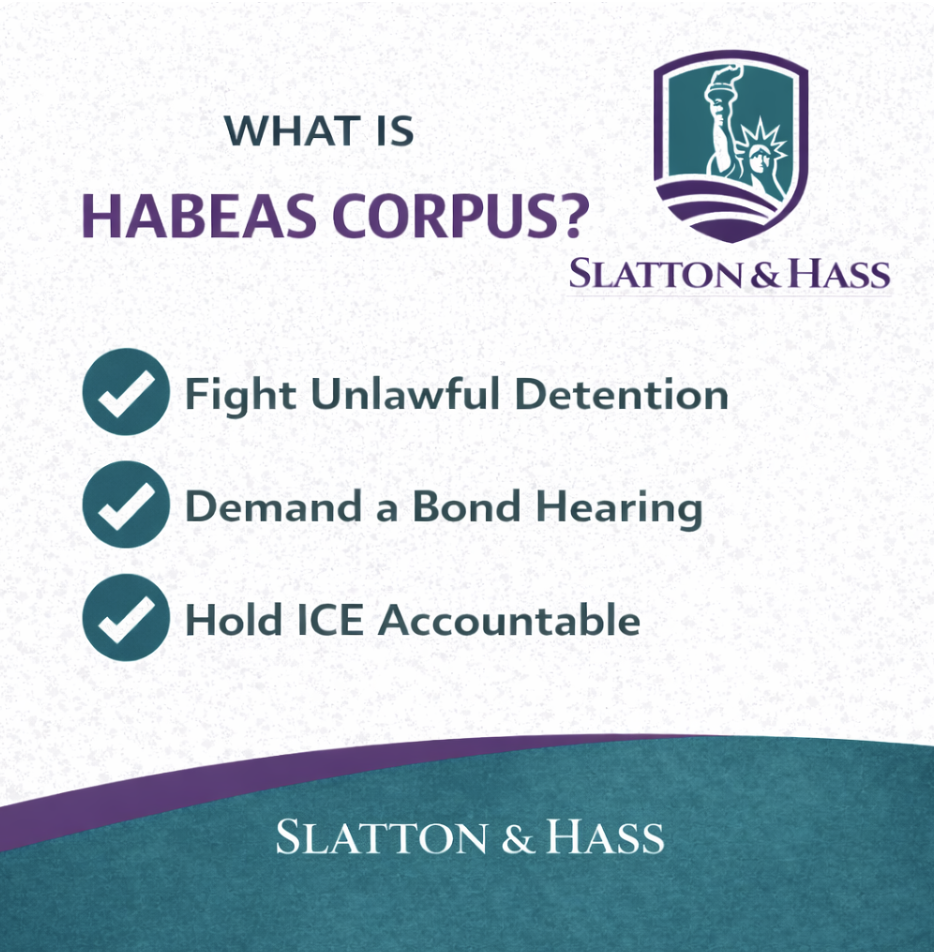
What Habeas Corpus Actually Is
Habeas corpus is one of the oldest legal protections in existence, dating back centuries. The phrase translates roughly to "you shall have the body." In practical terms today, it is a formal legal challenge filed in federal court that forces a judge to examine whether someone's detention is lawful. It bypasses the immigration court system entirely and lands the case in front of a federal judge.
That distinction matters more than most people realize.
Why Immigration Court Isn't Always Enough
Immigration courts are part of the Executive Branch, the same branch of government that includes ICE and DHS. Immigration judges are not Article III judges. They do not have the same independence from the agencies that enforce immigration law.
Federal court is a different arena entirely. When you file a habeas petition, you are in front of a judge who answers to no agency, no administration, and no enforcement priority. The rules of engagement change.
Who Habeas Can Help
Habeas cases are not for every situation, but they can be critical in several circumstances.
When someone has been detained for an unreasonable amount of time, courts have found that prolonged detention without a bond hearing can be unconstitutional. If your loved one has been sitting in a facility for months with no clear end date, that is worth a serious legal look.
When a removal order is being executed and there is a legal error in the case, whether a due process violation, an incorrect application of the law, or something that was never properly reviewed, habeas can serve as an emergency brake.
When the immigration court system has failed to address the real legal question, federal courts can step in. Some issues are simply beyond the authority of immigration courts to resolve. Federal courts are not.
When a person is being held somewhere that makes it nearly impossible to fight their case, whether due to facility conditions, repeated transfers, or lack of access to counsel, habeas opens a door that detention was designed to keep closed.
What the Process Actually Looks Like
This is federal litigation. It requires a legal brief arguing why the detention or removal is unlawful, filed in the correct federal district court, with jurisdiction properly established. The government responds. A judge rules.
Done right, it can result in release from detention, a stay of removal, or a court order requiring a proper bond hearing that should have happened long ago.
Why We Take These Cases
Most immigration attorneys do not handle habeas. It requires federal litigation experience and a different skill set than standard immigration practice. We take these cases because we believe that when someone's liberty is on the line and every other door has closed, there needs to be somewhere left to turn.
If someone you know is detained and the system feels like it has stopped listening, a habeas petition may be the option no one has mentioned yet.
Talk to Us
We offer consultations for families and individuals dealing with detention and removal. If you are not sure whether habeas applies to your situation, that is exactly what a consultation is for.
Slatton Hass Immigration — we fight in federal court when it counts.