
Planning for the Unexpected: A Guide to Preparing for Immigration Detention
Preparing for the possibility of immigration detention is emotionally hard, but practical preparation can protect you and your family if the worst happens. I hope you never have to utilize the information in this blog. Detention often happens suddenly. People are taken from their homes, workplaces, or traffic stops with little warning. Planning ahead gives you control over what happens next, even if you are not there to manage it yourself.
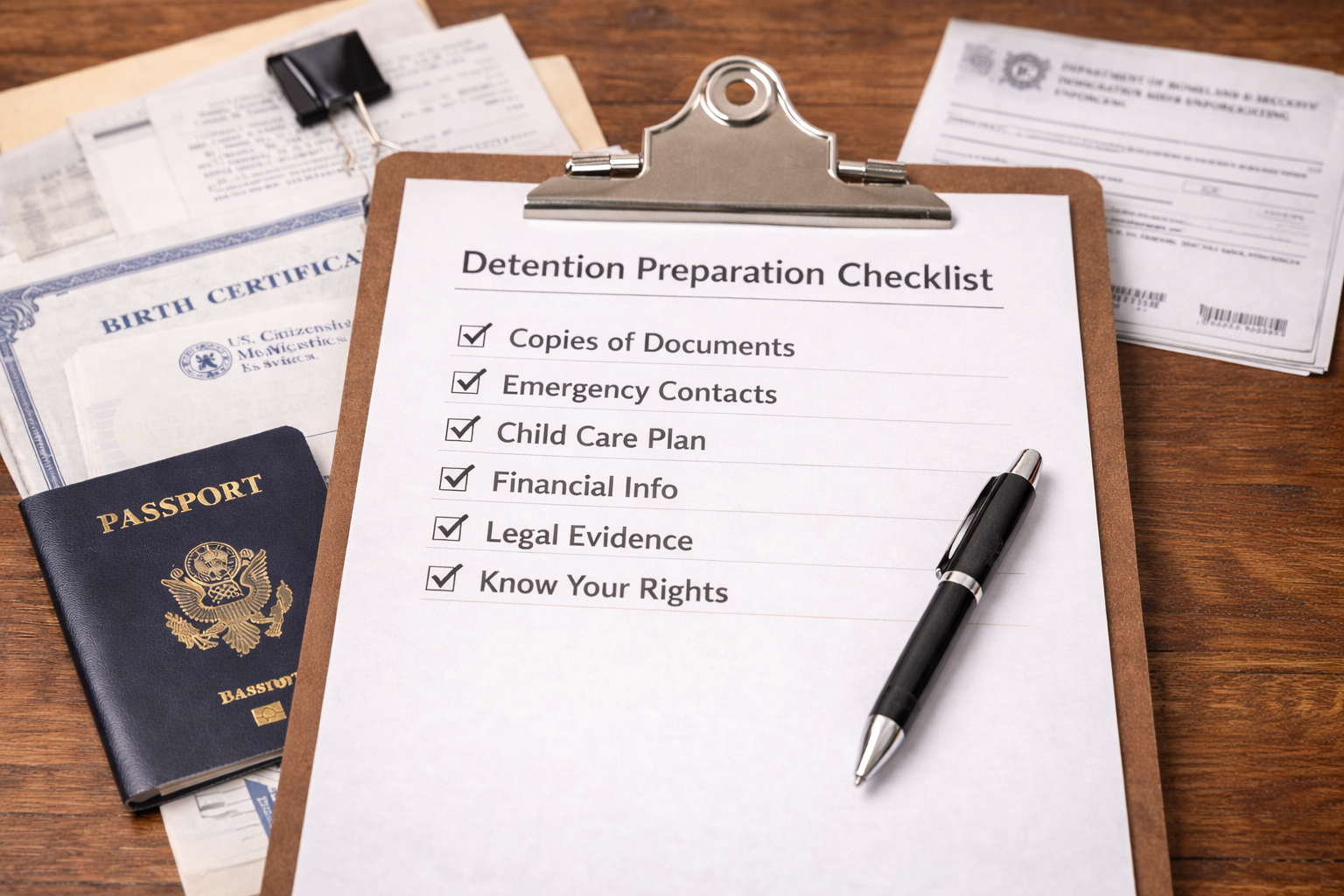
Start by gathering and organizing your important documents. Keep copies of your passport, birth certificate, immigration paperwork, court notices, receipts, and any applications you have filed. If you have a lawyer, keep a copy of your contract and their contact information. Put these documents in a safe place that someone you trust can access easily. If possible, also keep digital copies in a secure cloud folder or email them to yourself and a trusted person.
Choose an emergency contact and make a detention plan. Pick at least one person who knows what to do if you are detained. This should be someone who can contact your lawyer, take care of your children if needed, and help manage bills or mail. Write down their name, phone number, and role in your plan. Share your lawyer’s information with them so they can act quickly.
Plan for your children. If you have children, especially U.S. citizen children, you should decide who will care for them if you are detained. Consider a temporary guardianship or caregiver authorization document so schools and doctors can speak to the caregiver. Make sure your child’s caregiver knows where important items are kept and has emergency phone numbers. Keep your child’s birth certificate and school information in the same document folder as your immigration papers.
Protect your finances. Detention can interrupt your income without warning. Try to save emergency funds if possible. Make a list of monthly bills and how they are paid. Share this information with someone you trust so payments do not fall behind. If you have a bank account, consider giving limited access or written instructions to a trusted person. If you pay rent, utilities, or child support, write down account numbers and due dates.
Memorize important phone numbers. In detention, you may not have access to your phone contacts. You should memorize your lawyer’s phone number and at least one family member or trusted friend’s number. Write them on paper and keep them in your wallet in case your phone is taken.
Prepare your legal case ahead of time. If you may be placed in removal proceedings, gather evidence that supports your case now. This can include proof of how long you have lived in the United States, family ties, medical conditions, school records, tax records, and letters from employers, churches, or community members. If you may qualify for asylum, VAWA, T visa, U visa, cancellation of removal, or another form of relief, start collecting documents that show hardship, abuse, trafficking, or fear of return.
Understand your rights if detained. You have the right to remain silent and the right to speak to a lawyer. You do not have to sign documents you do not understand. You can ask for an interpreter. You can ask for a bond hearing in many cases. Knowing this in advance can help you stay calm and avoid making mistakes under pressure.
Pack a small emergency bag if you are truly at risk. Some people keep a small bag ready with essential items such as eyeglasses, medications with prescriptions, important phone numbers, and copies of documents. Detention centers may limit what you can bring, but having these items ready can help in the first days.
Prepare emotionally and mentally. Detention is stressful and frightening, especially when separated from family. Talk with your loved ones about your plan so they are not confused or panicked. Remind yourself that detention is not the end of your case. Many people win release and legal status after detention. Knowing that you have prepared can reduce fear and help you think clearly.
Stay informed about your case. If you are already in immigration court or have pending applications, check your mail carefully and keep your address updated with the government. Missing a court date because you did not receive notice can cause serious harm to your case. Ask someone you trust to check your mail if you are detained so deadlines are not missed.
Most importantly, talk to an immigration attorney before detention happens if you can. A lawyer can help you understand your risk, your options, and what kind of evidence you should collect. Preparation does not mean giving up hope. It means protecting yourself and your family while you continue fighting your case.
Detention takes away your physical freedom, but preparation protects your voice, your family, and your future. Planning now is an act of strength and care for the people who depend on you.
Checklist for detention preparation
- Make copies of your passport, birth certificate, and immigration documents
- Store copies in a safe place and digitally if possible
- Write down your lawyer’s name and phone number
- Choose an emergency contact and share your plan with them
- Make a child care plan and prepare caregiver authorization if needed
- Gather your child’s birth certificate and school information
- List your monthly bills and how they are paid
- Save emergency money if possible
- Memorize important phone numbers
- Collect evidence for your immigration case
- Prepare a small emergency bag with essentials
- Learn your rights in detention
- Ask someone to monitor your mail
- Schedule a consultation with an immigration attorney